High speed caused deadly train derailment in Burlington
Posted Mar 1, 2012 11:44:17 AM.
This article is more than 5 years old.
RICHMOND HILL, Ont. – A Via Rail passenger train that derailed Sunday in Burlington, Ont., while switching tracks was travelling over four times the maximum authorized speed, Transportation Safety Board investigators said Thursday.
Three Via employees were killed in the derailment — two engineers from Toronto and a trainee from Cornwall. Forty-five passengers were injured.
Data from the black box showed the Train 92 was travelling almost 108 kilometres an hour when it reached the switch. The maximum speed limit while changing tracks is 24 kilometres an hour.
TSB lead investigator Tom Griffith said the team is now trying to figure out why the train didn’t slow down.
“While we know the excess speed caused the derailment this is not the end of the investigation, it’s only the beginning,” Griffith said.
“We need to figure out why. We need to understand the environment in which the crew was operating and why they made the decisions they did,” he added.
Griffith also said the crew would have known to slow down, but said there’s no sign the brakes were ever applied.
“We had three experienced people at the front of that train. Why were they doing that? That’s what we have to find out. That’s the hardest part of this investigation,” he said.
The team is now inspecting the signal and the train itself.
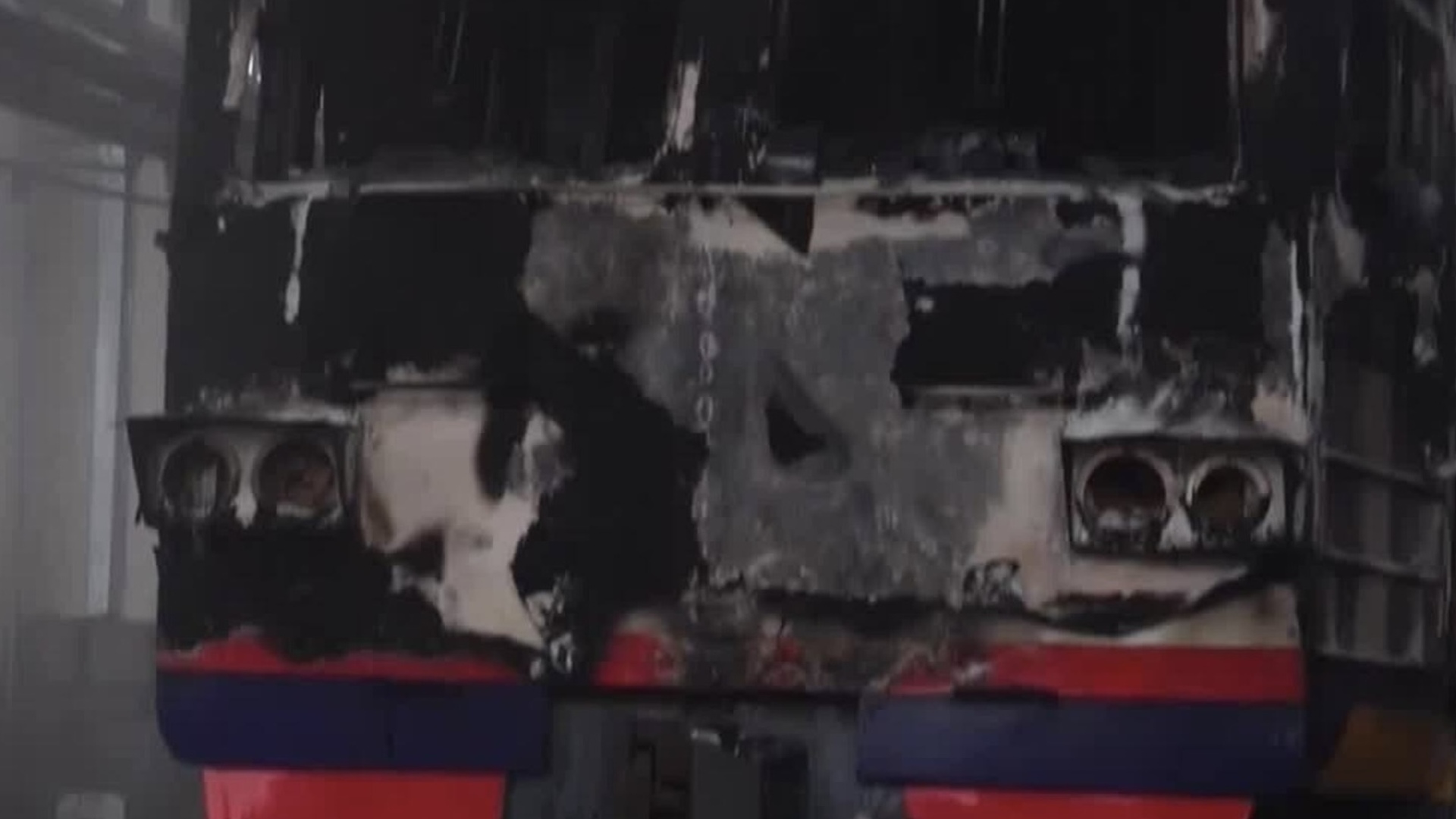
The damage to the locomotive is so severe, it’s making it very difficult to get any answers.
The switch involved in the accident is one that is “very rarely ever used,” and requires the train to slow to 24 kilometres an hour, instead of the usual 72 kilometres an hour.
“Because of other train movements in the area, they had to use this switch, which is still legal, but is a much slower switch than most crossovers,” Griffith said.
Still, he added, the signal indication would have been yellow, telling the engineers that they had to reduce the speed to 24 kilometres an hour.
Two people with 30 years of experience shouldn’t have been travelling at that speed, at that location, at that time, Griffith said.
They should have gotten the signal about a mile-and-a-half, or 2.4 kilometres, before the switch, early enough “that if they wanted to slow down, they could have slowed down,” he said.
The train’s black box is key in the probe — it records the train’s speed, brake pressure, when the brakes were applied, and whether the whistle was blowing. But it does not record voice.
“Unfortunately the lack of an on board voice recording will make this investigation more challenging,” Griffith said.
“Once again we are urging Transport Canada and the railway industry to make sure that voice recorders are installed on all Canadian trains. Currently they can only be found on aircraft and ships in Canada, not trains.”
CN, which owns the tracks and leases them to Via, has also said it investigated the tracks before the crash and found no signs of deterioration or wear, and police have ruled out any criminal wrongdoing.
Passenger injuries ranged from minor to a broken leg, a back injury and a heart attack.
At least two class-action lawsuits have been launched.
The train’s locomotive and one passenger car flipped onto their sides and crashed into a small building next to the tracks as a result of the accident, while another passenger car was left leaning precariously in the aftermath. Three other cars were vacant.
Two of the engineers, Peter Snarr, 52, and Ken Simmonds, 56, both of Toronto, were experienced drivers, each with more than 30 years in the industry. A trainee, Patrick Robinson, 40, of Cornwall, Ont., joined them in the cab to observe. Although Robinson was new to passenger trains, he had 20 years experience with freight.