Ottawa’s road safety plan up in the air amid possible speed camera ban
Posted Oct 2, 2025 01:20:14 PM.
Last Updated Oct 2, 2025 01:20:20 PM.
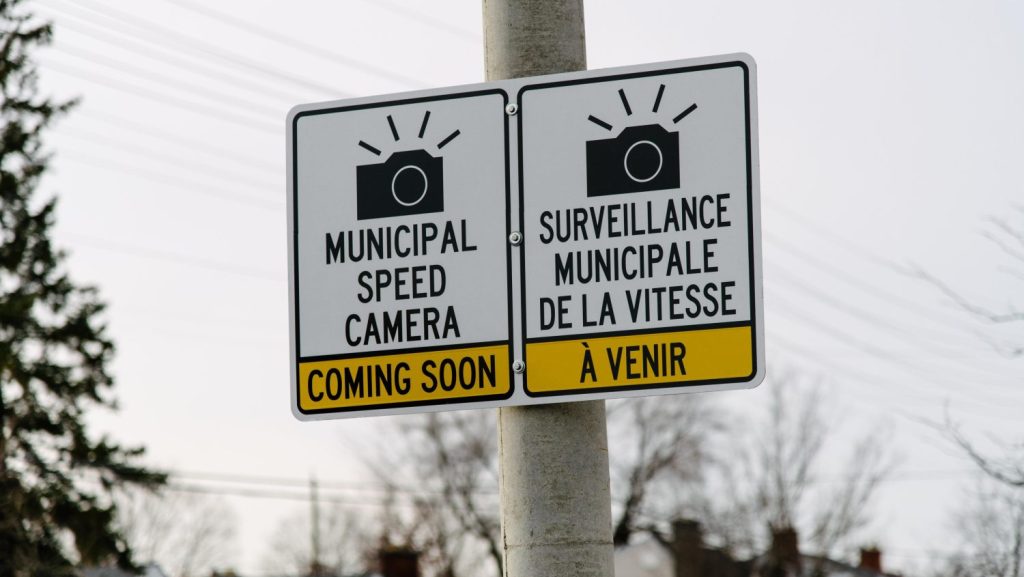
City of Ottawa staff are raising concerns about what would happen to a key municipal safety plan if the Ontario government goes ahead and bans speed cameras.
In a memo directed to members of council from Alain Gonthier, General Manager, Public Works Department, it states that the city’s Road Safety Action Plan could be on the line if Premier Doug Ford tables legislation eliminating automated speed enforcement (ASE) cameras across the province.
The program in Ottawa was launched in 2020, and data collected by staff shows the cameras do reduce speed, which is a main priority in the safety action plan. The municipality first launched with eight cameras specifically around schools, and showed it is “an effective countermeasure” to target high-risk driver behaviour.
This followed several years of Ottawa expanding the cameras, with the majority near schools, and six near playgrounds or parks. Four cameras are being piloted on high-speed roads as part of a project in rural locations this fall.
“The activation of 24 cameras in the fall of 2025 is dependent on the decision made by the Ontario Government and would bring the total number of cameras in operation to 84,” the memo reads.
According to data collected by staff, the program has significantly reduced speeds. Within three months of a camera being set up, 57 per cent of drivers were compliant with the limit. After three years, the number rose to 81 per cent.
Where the fine money is going
“In a few weeks, our government will introduce legislation to ban speed cameras in Ontario, to protect taxpayers and drivers and stop them from being gouged,” Ford said at a press conference last week.
Prambreet Sarkaria, Ontario’s Minister of Transportation, said that speed cameras “have become nothing more than a tool for raising revenue.”
The memo from city staff shows that since its launch, the ASE program has collected $97.5 million in fines from Ottawa drivers.
Staff say that $18.3 million went to the province for the mandatory victim surcharge, $37.6 million went to admin costs of the program, and $41.6 million went to the Road Safety Reserve, which helps the municipality fund safety initiatives like crossing guards, roundabouts, traffic lights and more.
“City staff will carefully review the details of the proposed legislation and once tabled, assess its
potential financial impact as well as impacts to current and planned road safety initiatives,” the memo reads.