Canadian steel industry: ‘People are uncertain’ amid U.S. trade war
Posted Oct 28, 2025 03:52:49 PM.
Last Updated Oct 28, 2025 06:20:03 PM.
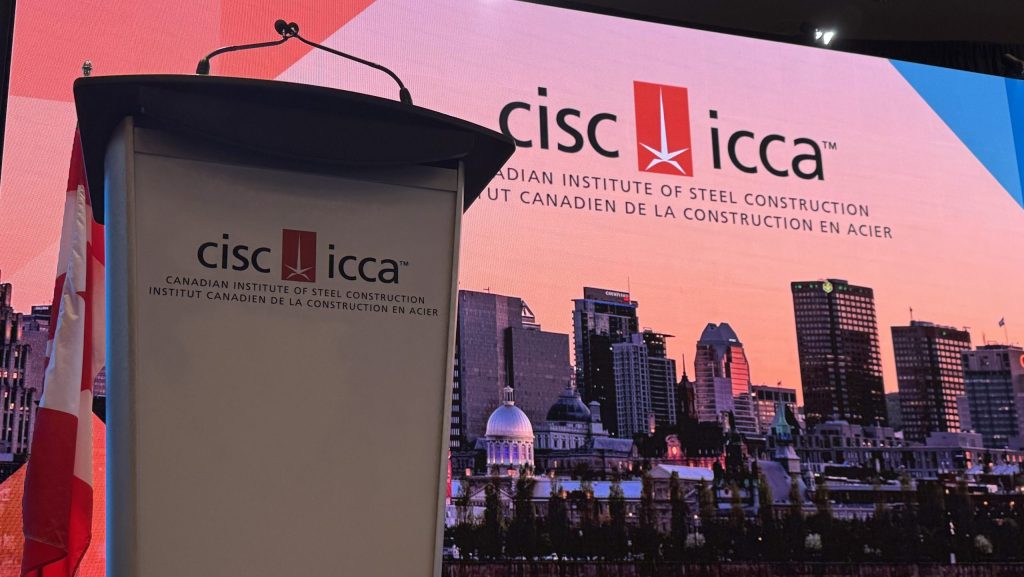
After a turbulent year for Canada’s steel industry, now facing more tariff uncertainty under U.S. President Donald Trump, the Canadian Institute of Steel Construction (CISC) is gathering industry leaders this week in Montreal for its annual steel conference.
Organizers say the goal of the conference is to strengthen the sector for what industry leaders call a period of uncertainty.
“Right now, it’s a bit slow, I have to say,” explained David Drouin, president of Camnor Group. “And that’s what we see in the economy in Quebec and in Canada, because people are uncertain.”
Canada’s steel industry has been taking a bruising due to Trump’s 25 per cent tariff, originally introduced in March.
“People are holding on projects a little bit more than what we’ve seen before. And it’s creating a harder time to obtain projects in Canada.”
Across Ontario and Quebec, thousands of jobs have been cut as American clients shy away from the Canadian market due to stormy tariff forecasts.
CISC president and CEO Keanin Loomis says the only way forward for the country’s steel sector is inward.
“You know, we talk a lot about reaching other markets,” Loomis said. “That’s really difficult in the steel industry. Steel is so heavy and tough to transport as well. … The one great market growth opportunity for us here in Canada is our own market.”
Amid the trade war, industry leaders say a new atmosphere is taking shape — one focused on collaboration and sharing strategies to stay afloat.
“Those are things that we share amongst ourselves, but also things that we bring back to the association, then the association through its lobbying effort brings to either the provincial governments or the federal governments to push that agenda to make changes that benefit the industry,” said Maxwell Cameron, the district sales manager for Quebec and Maritimes for NUCOR/Vulcraft Canada.
The conference comes just days after Trump announced an additional 10 per cent tariff on Canadian goods.
Though Washington has yet to clarify which of the various tariffs on Canadian exports will be hit, steel fabricators say the move underscores what’s been dogging the industry from the start: uncertainty
“There’s been no executive order signed. So we’re going to just treat that as bluster and hope that ultimately the president will cool off and see how important it is to reach a trade deal with Canada,” explained Loomis.
“Ten per cent is going to be 25 per cent, is it going to be 50 per cent — all depends on what kind of steel you buy,” added Cameron. “And that gives a lot of people pause. They don’t want to enter in our contract where there’s uncertainty, especially when you’re talking like hundreds of millions of dollars.”
Sourcing steel in Canada
While American contracts dry up, fabricators say domestic demand isn’t keeping pace either, and that’s leading to fierce competition at home.
“Before maybe I had four or five people bidding on a project. Now you can have up to 17, 18 fabricators all bidding on the same project,” said Cameron.
“So in some situations, we did have to deal with clients saying, ‘OK, well, in absence of clarity, I think I’m safer to give the job to a United States company,'” added Drouin.
But Canadian steel firms are holding out hope that federal policy could tip the balance, with new procurement rules passed by the Mark Carney government requiring companies contracting with Ottawa source steel domestically.
They’re also eyeing growth from the expanded military budget, as Canada barrels toward two per cent of GDP by 2025 and five per cent by 2050 — targets that industry leaders say could keep Canada’s steel mills well fed in the future.
“All government spending is good because steel is pretty much in everything, right? And we don’t make ships, but all that spending will of course require new buildings, new bridges,” said Loomis.
“We can trust that over time, yes, there will be more projects on the federal side and the army side,” Drouin added.