Overdose calls decrease in 2025 but true magnitude of problem hard to delineate
Posted Mar 8, 2026 01:50:44 PM.
Last Updated Mar 9, 2026 11:45:50 AM.
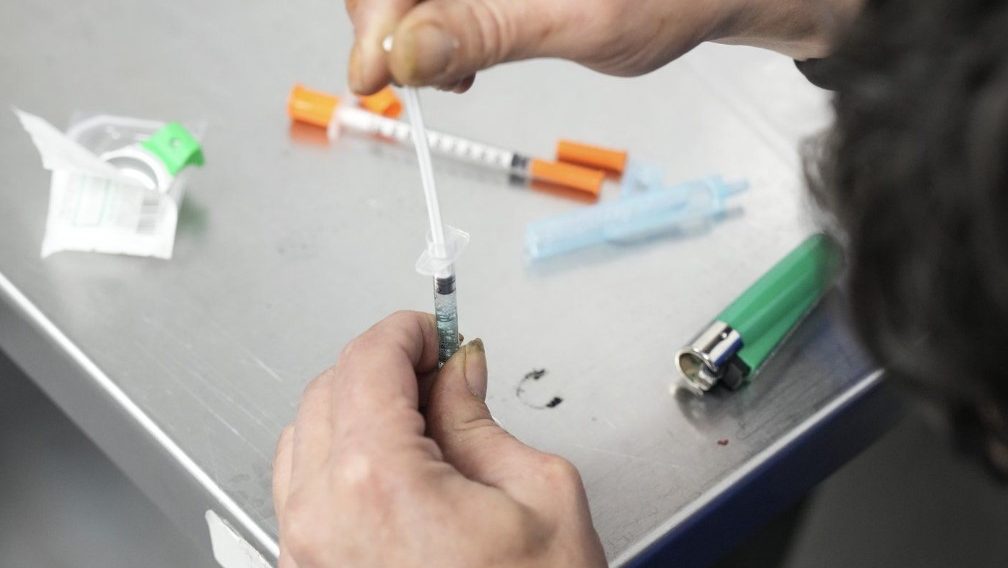
Ottawa saw a stiff decrease in the number of 911 calls related to overdoses in 2025, but police say that doesn’t always give an accurate representation of the problem across the city.
According to year-end data, OPS say they responded to 810 overdose-related calls in 2025, down from 1,480 the year prior. This number has been steadily decreasing since its peak in 2023.
But so far in 2026, numbers seem to be climbing. Most recent year-to-date data encapsulates Jan. 1 to Feb. 17. In this time period, OPS responded to 93 overdose calls, compared to 51 during the same period in 2025.
But not all who suspect an overdose call 911. Ottawa Public Health data shows that between Feb. 2 and Mar. 1, Ottawa hospitals saw 276 suspected overdose cases.
Many of those hospital visits occur in the Lowertown West neighbourhood. According to OPH, this community sees catastrophically higher rates of overdoses compared to any other Ottawa neighbourhood.
On average, Lowertown West sees 126 overdoses per year, more than double Sandy Hill, which sees the next highest. When taking into account the population of these neighbourhoods, Lowertown West’s rate of overdose per 100,000 population is nearly six times higher than Sandy Hill.
Lowertown West was also home to one of Ottawa’s supervised consumption sites prior to its closure in September 2025. OPH fought to renew an exemption to continue operating the site downtown, citing its role in ensuring the “health and safety of all Ottawa residents,” but that exemption was ultimately not granted by the Ministry of Health.
While the high rate of overdoses in the neighbourhood cannot be said to be a result of the closure of the site, it does represent a need for continued health intervention.
Since the program launched in 2017, it has had nearly 33,000 visits. In 2024 alone, it had 3,546 visits, and staff were able to respond to 27 non-fatal overdoses.
As a result of the closure, people are being directed to other consumption and treatment sites, Inner City Health and Sandy Hill Community Health Centre, and staff have been redistributed.
The downtown site now operates as a Needle and Syringe Program Drop-In.