Library board looks at expanding free membership to include Indigenous communities
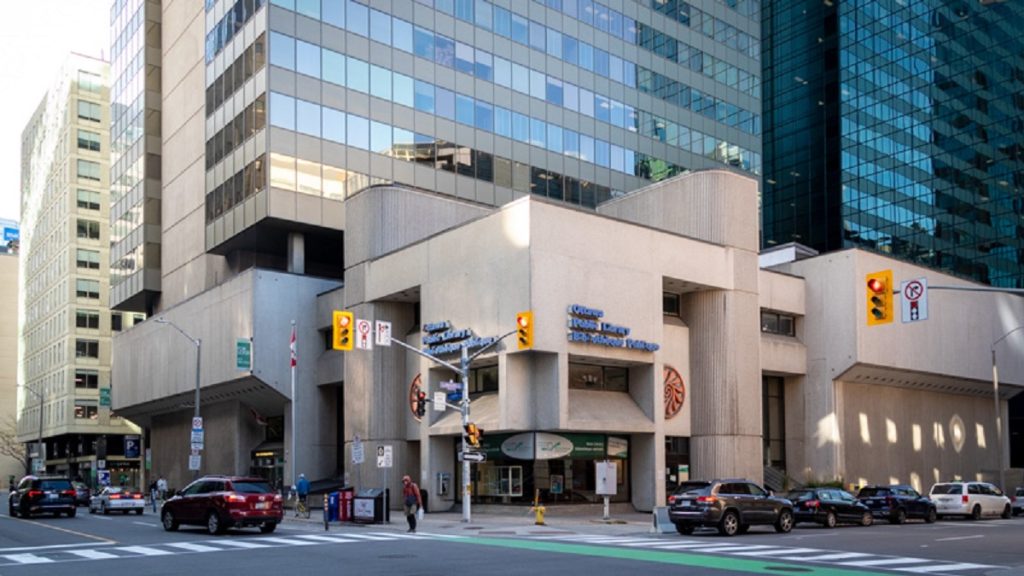
Posted Oct 11, 2025 03:06:40 PM.
Last Updated Oct 14, 2025 12:24:40 PM.
The Chief Librarian at the Ottawa Public Library is asking the board to approve an expansion of its eligibility criteria for free memberships to include Indigenous communities.
For residents who live in Ottawa, membership in OPL services is free. Those living outside the municipality’s boundaries who wish to use the services must pay a membership fee. That fee is $90 annually for an individual membership or $180 for a family.
In a report to the OPL Board, Sonia Bebbington, Chief Librarian and Chief Executive Officer, said the current membership rates present a barrier to access for Indigenous individuals who reside on the Quebec side of the Ottawa River or on-reserve, as they are currently ineligible for a free, full-access membership.
“Kitigan Zibi Anishinaabeg First Nation and Algonquins of Pikwakanagan First Nation are being prioritized for the Indigenous Membership Initiative due to their ongoing involvement in the Ādisōke project,” Bebbington’s report states. The Ādisōke project is a joint initiative between the Ottawa Public Library and Library and Archives Canada.
“OPL has taken steps to build relationships with Indigenous communities in recent years and has leveraged the knowledge and expertise of Indigenous individuals throughout the architectural and service design process for the new Central branch at Ādisōke,” Bebbington said. “OPL’s current full membership excludes Indigenous people who are not residents but who have deep historical, cultural, familial, and economic ties to Ottawa. This reinforces colonial jurisdictional divisions that do not reflect Indigenous histories, realities, and patterns of mobility.”
If the report is approved, free, full access membership would also be extended to urban Indigenous peoples living on the Quebec side of the Ottawa-Gatineau census metropolitan area.
The move from the OPL Board would add Ottawa to a group of jurisdictions who have expanded free membership to Indigenous communities. Notable mentions include the Toronto Public Library, Hamilton Public Library and Innisfil Public Library. In the Ottawa-Gatineau census metropolitan area, several museums and galleries have also introduced a free admission policy for Indigenous visitors.
“The abovementioned initiatives are all part of the broader work to ensure cultural institutions recognize Indigenous rights, eliminate barriers, and create meaningful access to spaces, resources, and services for Indigenous communities,” Bebbington said. “The recommendation in this report parallels what other GLAM institutions across the country have already done and ensures that OPL continues to advance impactful and mutually beneficial actions related to Truth and Reconciliation.”
Staff also say there will be little financial impact as it does not anticipate the target groups are currently paying for memberships.
“Staff estimate minimal opportunity loss, greatly offset by the benefits of the Initiative,” the report says.
The report will be brought forward in front of the OPL Board Oct. 14.