Ottawa’s unique gem Red Apron celebrates 20 years in business
Posted Dec 13, 2025 04:01:05 PM.
Last Updated Dec 14, 2025 12:09:46 PM.
In 2006, Jennifer Heagle and her associate decided they wanted to start a food business, but not just any food business.
Both trained as chefs, the two women sought to fill a gap for people who wanted to eat well, but didn’t always have the time on their hands to make that a reality for their families.
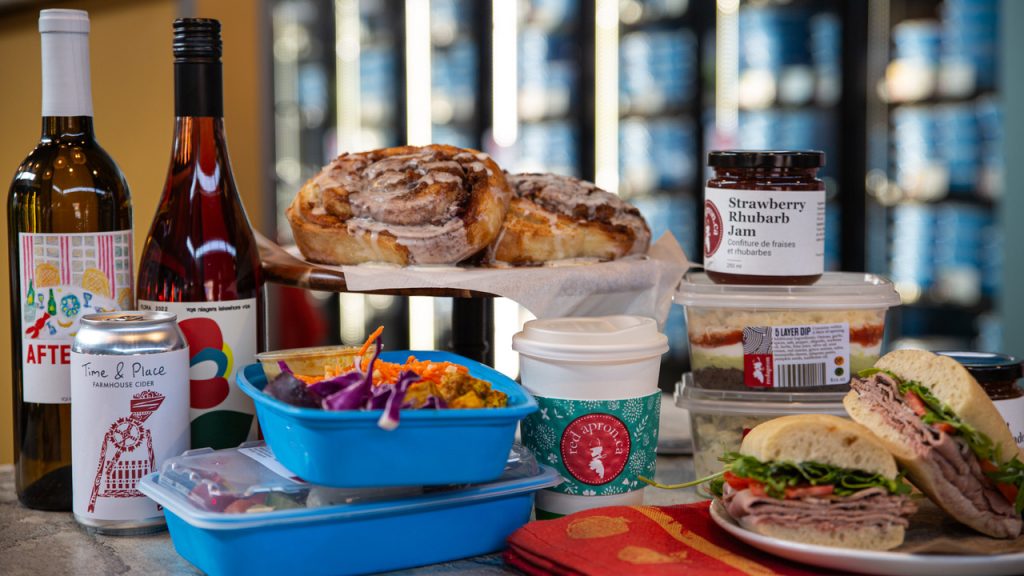
A unique concept at the time, Red Apron was born to provide ready made meals with fresh and local ingredients, that could be picked up in store or delivered.
“That was how we started 20 years ago, in a very small space that we called the closet, because it was really probably about the size of our boardroom right now,” Heagle laughed. “And out of that space, we started cooking and feeding people, and it grew and it grew and it grew and it grew.”
The new year marks the 20th anniversary of Red Apron, and Heagle spoke to CityNews about the values Red Apron holds that have allowed it to flourish.
If you’ve ever walked into Red Apron at 410 Gladstone Ave., you may have noticed predominantly female workers in the storefront and kitchen. While Heagle said she does have a few male employees, the company prides itself on being female-owned, led and powered.
Aside from the toxic kitchen culture that often includes drugs and alcohol and an unsafe environment for many women, Heagle said food work also often means long hours that are not conducive to family life, and things like heavy lifting.
According to the Government of Canada Job bank, men make up 74 per cent of chef and cook positions across the province.
“I’d owned a restaurant for a little while, tested that out, and thought, no, this is not the way I want to do this. [My partner] owned a catering company for a while. And we just knew what we didn’t want to do. And what we did want to do was have a healthy work environment where we worked daytime hours and fed ourselves and our families and supported ourselves and our families,” Heagle told CityNews. “And yeah, I think that put us in a category that was not seen as ‘chefy’.”
But despite that distinction, Red Apron is full of gourmet and healthy foods. Heagle herself was trained as a chef at Le Cordon Bleu, a prestigious French and International culinary school.
Yet that recognition does not always win the fight against the male-dominated norms of traditional kitchen work.
“You’ll see somebody come into the business who is looking for the person in charge,” Heagle said. “And he’ll walk past all the women and go to the one guy that’s working in the front or the back of the business and just assume that that person is in charge.”
Heagle said this happened more than once to a male employee who eventually responded “you just walked all by all the people who are in charge to come to me”.
Instead of the traditional food service gruelling hours, Red Apron functions like a team, where no one works more than 40 hours per week and late nights and early mornings are at a minimum.
Giving back
According to Heagle, Red Apron sees itself as an extension of the community, drawing a distance from a traditional business model.
She said the team works closely with local farmers and vendors instead of focussing solely on convenience and price.
“We’re very careful about how we shop in the summer months and the growing season, she said. “We have, I would say, six or eight really key farmers, and we buy from them as much as we can while they’re growing.”
She noted Red Apron solely buys beef from one women-owned family business in the area.
“We always pay more than we would otherwise pay,” she said. “It’s just really important to us to support that local food culture and growers, because we believe it’s important to be able to source your food as locally as you can and know the person who’s growing it.”
On the flip side, Red Apron also has initiatives that fuel funds and support back into the community.
A few years ago, Red Apron switched to reusable takeout containers through Friendlier. Every time a customer brings back a container, they are given 50 cents. But Heagle said they are also given the option to donate that 50 cents.
While 50 cents may not seem like a lot, with a 90 to 95 per cent return rate on all containers, it adds up. Heagle said through the Return to Donate program Red Apron has donated over $120,000 to organizations like Centretown Community Food Centre and Parkdale Food Centre.
Reusable containers also help with the business’ environmental footprint, another value Heagle said is held in esteem.
“On the environmental side, we deliver all of our meals in a fleet of fully electric vehicles. We’ve been doing that since 2018,” she said. “And this year we’re hoping to be able to maybe put solar panels on our roof.”
The storefront also has the city’s only permeable parking lot.
Staying afloat
While buying local and some of the environmental initiatives can be more costly upfront, Heagle said making these decisions has allowed the business to flourish.
Nearly eight years after purchasing the electric delivery vehicle, she said costs for maintenance and repairs are net to nothing.
“If you’re looking in if you’re in the market for a car I’m telling you buy an electric car within three years it will have paid for itself,” Heagle chuckled.
The switch to reusable containers also came with a bit higher upfront cost and the decision to donate the proceeds takes away from the company’s own profits. However, to Heagle this is still a success because the money from these products is being used where it is more needed.
“Our philosophy about everything is If you make the right decision, over time it is the best decision,” she said. “It may not be that on the surface or in the moment, but over time, it will turn out to be the best business decision that you can make.”

Looking ahead
Twenty years in business is a huge milestone, and Heagle and the team are ready to start celebrating.
Heagle said they are planning lots of celebrations for the new year and are hoping to match some sizeable donations.
“We want to raise $20,000 and we’re going to match it with $20,000 of our own money,” she said. “So that would be a $40,000 initiative for 2026, which we’re really excited about.”
But the team is also looking towards the future.
“What we’re always focusing on is being better,” she said. “So putting out better food, giving people more value, paying our employees more, giving our employees more benefits.”
“We’re just looking to keep doing good work and growing our business a little bit every year. For us, it’s not about huge steps. It’s all about little steps because they do add up over time, and we’re going to be around for a long time. We’re not going anywhere. We’re just getting started.”