Common ceilings a hazard in earthquakes, Carleton U researchers discover
Posted Apr 6, 2026 01:57:21 PM.
Last Updated Apr 6, 2026 02:10:58 PM.
Structures are being shaken to help industries understand Ottawa’s infrastructure risks during an earthquake.
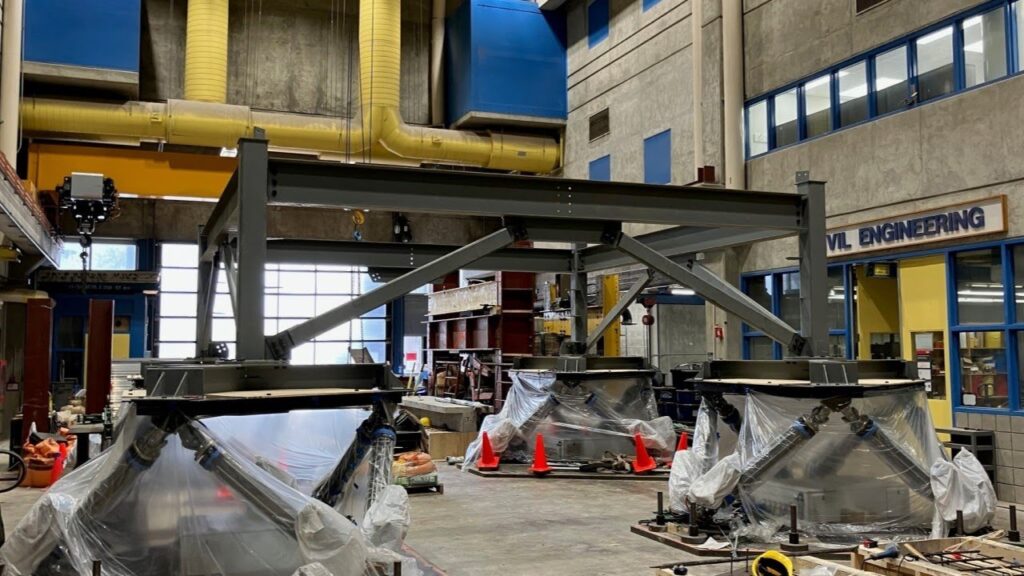
In the Carleton University Canada Foundation for Innovation-funded structures lab, civil and environmental engineering researchers are conducting tests to understand how buildings respond to intense shaking, and how they can be designed differently to minimize injuries and damage.
“We break things so we can figure out how to build them better,” Professor Jeffrey Erochko said in an interview.
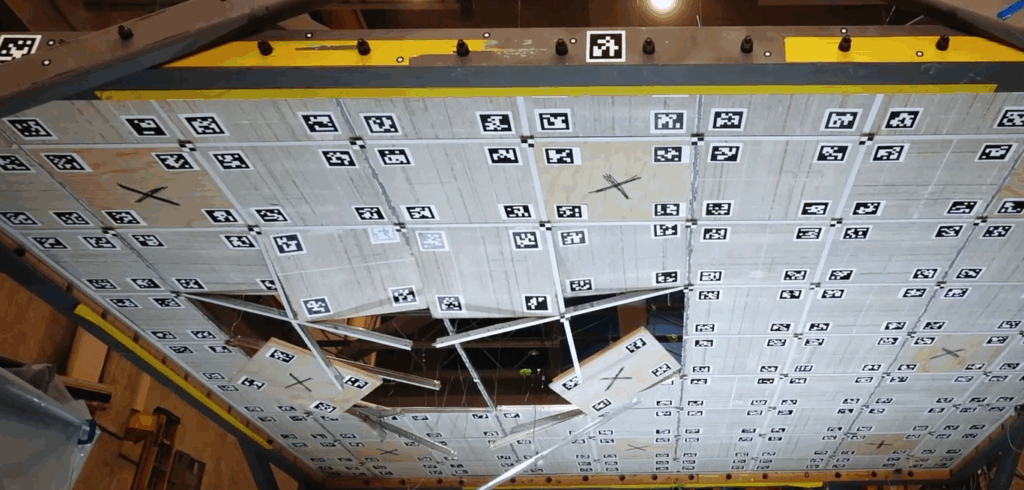
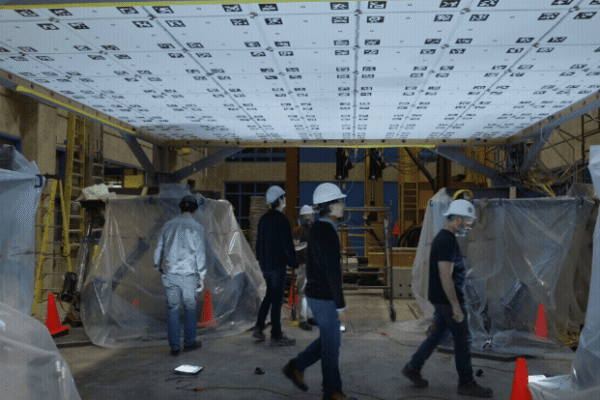
This is done by putting everyday items and construction techniques to the test; they are mounted on the lab’s “shaking table,” which imitates an earthquake. Specifically, researchers are looking into the way suspended ceilings react during a disaster, and other non-structural elements, like HVAC systems, gas lines and communication cables — all key components of a building.
The team is able to simulate how a quake will disrupt a 100-storey building and push it to the point of failure.
“If you think about a building today, you can expect it to perform very well in an earthquake, but the non-structural components of the building we’re seeing are still susceptible to damage,” PhD student Cameron Flude said in an interview.
Suspended ceilings traditionally look like a grid system with tiles in place. They are often found in office buildings and in schools, researchers explained. The data collected by the lab shows that they are one of the most commonly damaged components of buildings during a quake.
“When they fall, they are both a falling hazard, and they can prevent barriers to people evacuating the building,” Flude said.
The tests are nearly identical to a real-life earthquake, with researchers using data from past disasters to test the components and imitate the movement.
One of the questions Erochko is asked is why this research is being done in Ottawa, where earthquakes are not as common as the west coast.
“People are not aware in eastern Canada that there are seismic hazards here as well,” he said.
The Ottawa Valley, up to Montreal along the St. Lawrence River are in a moderate seismic zone, Erochko explained.
“The difference between the west and the east is that in the east, although the earthquakes we could get can be just as big as the west, but they happen less often,” he said. “But it’s been a while since we’ve had a big one.”
The last large earthquake that was felt in Ottawa happened in 2010 when a quake hit the Val-des-Bois area north of the capital. It lasted about 30 seconds and was measured at 5.0 on the Richter scale. An information sheet by Natural Resources Canada notes that people as far as Kentucky felt the aftershocks.
Because of this, researchers are asking for better designs that take into consideration possible impacts before another “big one” happens in the nation’s capital.
“We’ll be able to see when panels pop out and fall,” Flude, said.
While ceilings are the initial focus, other components could be studied next, and the data they acquire can be applied toward enhancing design codes and upgrading existing buildings.
“Our overall goal,” he explained, “is to help protect people, save money and make society more resilient.”