Driver killed in 2021 VIA Rail train crash near Richmond may have noticed warning signs too late: TSB
Posted Apr 7, 2022 12:15:00 AM.
Failing to notice warning signs and lowered traffic bars may have been what led to the fatal crash involving a pickup truck and VIA Rail train in June 2021 in Richmond, a Transportation Safety Board (TSB) report on the crash says.
As outlined in the report, which was released on Wednesday, April 6, the crash happened shortly afternoon on Barnsdale Road, close to Eagleson Road, when the 29-year-old driver — a Westboro Utilities employee, left work.
The company allowed him and other employees to leave work early for the Canada Day holiday.
The report says the driver travelled his usual route home southwest on Barnsdale, which required him to pass through a train crossing, which was equipped with flashing lights, bell and gates.
At the same time, a seven-car Via Rail Train 53 heading for Toronto with 120 passengers departed the Ottawa train station.
And at about 12:15 p.m., the victim’s truck crested a hill about 1,300 ft northeast of the cross, when the gates were fully down.
The vehicle then started to descend the hill — the same time the operating locomotive engineer (OLE) sounded the horn and bell.
When, according to the report, the vehicle was 132 ft. from the crossing and only applied moderate braking while it travelled 79 km/h, which reduced the vehicle’s speed to 20 km/h.
The OLE immediately sounded the emergency horn and applied the emergency brakes just before the train struck the vehicle.
The pickup truck was thrown to the southwest side of the crossing, colliding with the south-side signal mast.
The truck was destroyed and the driver was fatally injured.
No passengers on board the train were seriously injured, however, two on-train services employees in coach cars sustained minor injuries — one required medical attention.
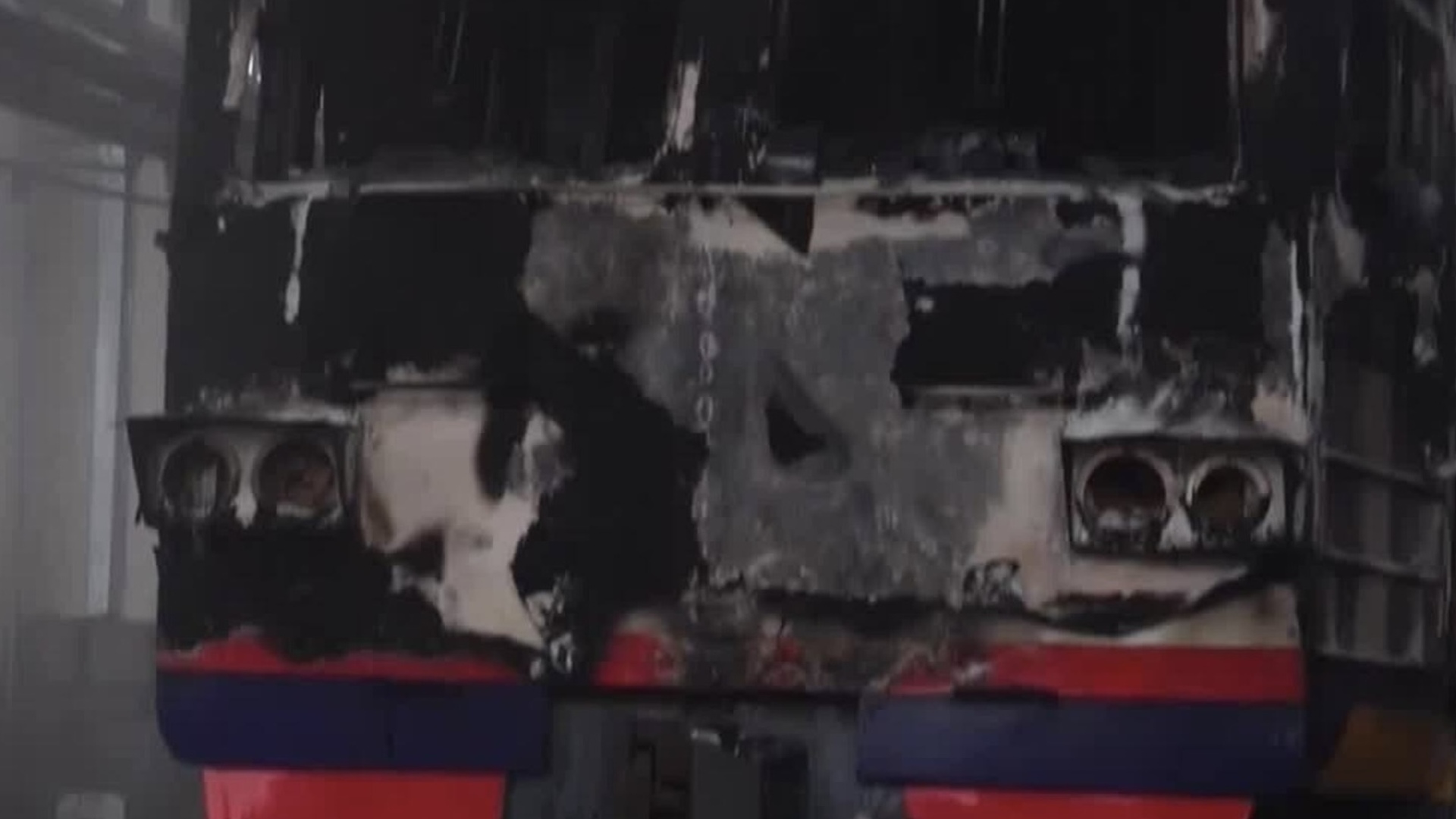
The train itself did not derail but the locomotive sustained “substantial damage,” the TSB says, including damage to its front door that resulted in the door opening during the crash, allowing for some debris to enter the cab and striking the ICLE, who was sitting in the middle seat, in the face. The ICLE’s safety glasses prevented injury, however.
At the time of the crash, temperatures were at 29 C with clear skies and good visibility. Road surfaces were also dry.
The TSB also noted that the crossing was designed to give drivers and approach warning time of 35 seconds — 10 seconds greater than the minimum of 25 seconds required by regulation.
However, due to the slight hill, a vehicle driver gets only about 18 seconds of warning — with the cross in full view — if travelling at the posted speed limit of 80 km/h.
Following the incident, the City of Ottawa conducted a speed study over an eight-day period to determine the average speed of traffic approaching the crossing.
The study found that vehicles increased their speed to 84 km/k as they approach the four per cent descending grade, slowing down to 72 km/h at the rail crossing stop line and maintaining that speed through the crossing to the “stop ahead” signs for the Eagleson Road intersection.
“When a driver becomes familiar with a particular level crossing or with a particular type of level crossing, and where the driver has never, or seldom, encountered an approaching train at the level crossing, the driver will tend to not expect to encounter a train,” the report states. “Since the driver in this occurrence was familiar with the crossing and had likely seldom encountered any trains there, he would likely have formed the expectation that there would not be a train at the crossing.”
Following the occurrence, though, TSB conducted a regulatory inspection of the crossing and found that it met all the regulatory requirements with regard to visibility, nightlines and crossing warning time.
“A driver’s familiarity with a railway crossing where trains are rarely encountered may lead, over time, to an increased expectation that there will be no train,” the report continues. “It is important that all drivers, especially those who are familiar with a given railway crossing, attend to all visual cues in the forward roadway when approaching railway crossings with the expectation that they may encounter a train.”