Ottawa’s master plan to prioritize public transit over roads
Posted Jul 25, 2025 01:41:00 PM.
Last Updated Jul 25, 2025 04:03:36 PM.
The City of Ottawa said it is putting forth a “transit first” approach when looking at moving people around the municipality.
Council approved the updated Transportation Master Plan Wednesday to move forward with efforts to improve the transit system up to 2046.
The city has dedicated approximately $3.9 billion in capital investments projects which is divided into $2.3 billion in transit projects and $1.6 billion in road projects.
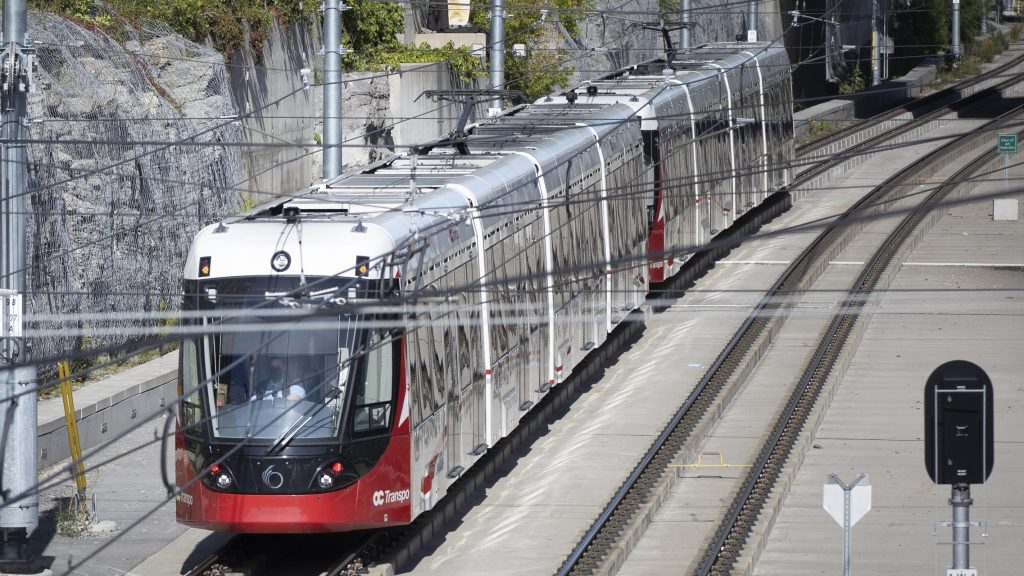
The plan outlines both the Needs-Based Network which identifies all projects that are needed to address the city’s mobility needs to 2046, and the Priority Transit Network which identifies a subset of projects to be prioritized and implemented by 2046. The Priority Transit Network also includes the third stage of O-Train extensions to Barrhaven and Kanata-Stittsville with an additional $8.3 billion price tag.
Other priority projects include new and expanded Bus Rapid Transit (BRT) corridors on the Baseline-Heron Transitway, Cumberland Transitway, South Transitway, Southwest Transitway, Kanata North Transitway, and the Heron/Walkley Transitway.
“The City’s ‘transit first’ approach ensures that road investments were only considered where transit would not be enough to meet travel demand,” the city said in a media release.
The city says road projects were only included in the Needs-Based Network if they fulfilled at the needs of addressing a road capacity deficiency or providing transportation access to support new development. Based on this criteria, the city says several road projects from the 2013 Transportation Master Plan are not included in the new network.
Ottawa’s population is expected to grow to 1.4 million people by 2046. The city expects to see demand for an additional 1.2 million daily trips. It approximates that half of these trips will take place in vehicles.
The city’s Official Plan sets the goal of having the majority of trips made by sustainable modes of transit — including walking, cycling, transit and car-pooling — by 2046. Currently 43.4 per cent of daily trips are made using sustainable transportation. The city says that projects in the Priority Network, in conjunction with active transportation projects, are predicted to result in a daily sustainable mode share of 48 per cent by 2046.